Thursday, 12 November 2020

Exposition: Organisational Strategies/Devices


Exposition is one type of discourse or writing. We use this type of discourse everyday: when we give information to someone, when we explain how something was done, etc.


Definition-meaning

Illustration-examples

Cause and Effect (causal analysis)-reasons for...and results

Comparison and Contrast-similarities and differences

Classification-categorisation

Analogy-a comparison of two unlike things

Analysis (process/subject)-step by step explanation, explain what                                                                              something is like

Problem-Resolution-problem-solution


Cause and Effect: Showing how facts, events, or concepts (effects) happen or come into being because of other facts, events, or concepts (causes).


Comparison and Contrast: Pointing out the likeliness (comparison) and/or differences (contrast) among facts, people, events, concepts, and so on... 


Classification: to organise items into a group and explain the characteristic of that group.

Analogy is another form of comparison.  It is different from a simile or metaphor because:

1) it highlights the similarities between two things you would never expect it to compare,
such as a television addict to a drug addict

2) it usually makes sure that we are familiar with one of the things in the comparison like a drug addict, but we never really view people who love to watch television as addicts.


Analysis: There are two types of analysis: process and subject.

Process analysis involves a step by step explanation of how something is done.

Subject analysis requires an explanation of what something is like e.g. cricket, love and marriage.

See more under comments.


Conclusion


Essay: MEAL Plan


Essay: Introduction


                                                        Identify the thesis statements below.
Identify any other elements that are likely to be found in an introduction.

Critique Sample #1

According to Aldous Huxley, “After silence that which comes nearest to expressing the inexpressible is music.”  Music, the free expression of a people, is a universal language that has the power to capture and transform a society. Dancehall is a type of music developed in Jamaica dance halls in the late 1970’s and incorporates hip-hop and rhythm and blues music.  This genre has infiltrated the social conscience of our youths, through its mind gripping lyrics from R to X rated content.  The evolution of dancehall has perpetuated negative influence against our youths worth and dignity.  The result is a generation of young people with deviant behaviours. Dancehall music promotes the use of drugs, advocates violence and encourages promiscuity, as well as the spread of HIV.

Critique Sample #2

One writer described communication as the basis of all relationships. Communication is a vital skill. According to Robinson and Hamil (2013), “Communication is the means by which we create, transmit and interpret ideas, facts and information, data, feelings and opinions.” Harold Laswell (1948) stated that the most convenient way to describe communication is to answer four questions: Who? Says what? Through which channel? To whom? Popular examples of communication include: written, oral, visual, and electronic.


Thursday, 5 November 2020

Language Techniques/Figurative Devices

Language techniques refer to the elements that a writer uses to emphasise the theme of the passage, poem or story. They help the reader to better understand the literary piece. Language techniques include figurative language. 

Figurative language is used in literature like poetry, drama, prose and even speeches. Figures of speech are literary devices that are also used throughout our society and help relay important ideas in a meaningful way. Here are some common figures of speech and some examples of the same figurative language in use:

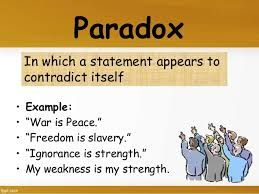
Simile      Metaphor    Personification    Onomatopoeia   Oxymoron    

Hyperbole     Litotes         Idiom         Alliteration   Allusion


Look under comments for definitions and examples of figurative devices.


MEAL PLAN


Does the paragraph below align with the MEAL Plan? 

Sample of a Paragraph on a Figurative Device

        Simile is one major device that the author uses in the passage, "The Wonderful". Simile is a comparison between two things and it is obvious that the writer uses this device in the paragraph three, line 4. He states, "The men of Jerusalem are like snakes in the grass..." The author compares the men of Jerusalem to snakes in the grass. This simile is quite effective because it helps the reader to understand just how treacherous the men are since snakes are usually associated with  deceit like the snake in the Garden of Eden. Therefore the men of Jerusalem cannot be trusted. Like simile, the author also uses another figurative device effectively in paragraph three.

Assignment 
Write an essay of approximately 400 words on three language techniques in the tsunamis passage. (25 marks) 
Due by the end of the Communication Studies period.


Wednesday, 4 November 2020

Functions/Purposes of Language


1. Communication Function: The main function of language is for communicating information, ideas and thoughts. People use language to make statements (Communication Studies is a complex course); commands (Get out of there!); questions (Do you believe she will pass this subject?), as well as for oaths and curses. 


2. Reflective Function: We use language to recall and recapture past experiences e.g. thinking about when you got in an accident or were in the hospital.


3.Expressive Function: Language can be used simply to express one's feelings, ideas, attitudes, without necessarily taking the reader or listener into consideration e.g. diary, journal...


4.Ritual Function: a marking in some way of important events or stages in all human societies. Rituals are normally a part of ceremonies which involve the repetition of a prescribed, usually written, form of language. For example, during funerals you might hear "Ashes to ashes, dust to dust...", weddings, "I now pronounce you husband and wife" or "for better or worse". Other examples include The Lord's Prayer or the national anthem at school every morning.


5. Other Social Functions: A person may use a specific language or dialect of a language to express solidarity or closeness with someone/group or to establish distance. Teenagers like you often coin words to establish a bond among themselves from an older generation. What are some words you use that older folks like myself might not understand?

In St. Lucia and Dominica the older people use the French creole or patois when they don't want the young people to understand what they are saying. 


6. Informative purpose: In this case language is used with the intention of giving or conveying information like a news broadcast, a bulletin board at your school, a textbook or television guide.


7. Cognitive purpose: When language is used cognitively, it is with the intention of affecting the audience in some way in order to evoke some type of response. Therefore when one uses language to persuade, entertain, stir to anger or arouse sympathy, one is using language for cognitive purposes. Jokes, political speeches and horror stories are different examples of ways in which language can be used cognitively


8. Poetic purpose: Language used in literary, stylistic or imaginative ways is poetic. The user focuses on the structure and pattern of the language and places emphasis on the manner in which the language is manipulated. For example, a poem.


9. Phatic purpose: Sometimes language is used simply to establish or maintain contact among people. Language used for phatic purposes does not necessarily seek to generate a meaningful response. For example, when we greet each other by saying "hello" or "good morning" we are using language to maintain social customs.


10. Metalinguistic Purpose: Simply put, this is the use of language to comment on, refer to or discuss language itself. A critique of your friend's essay or speech is metalinguistic. When you use language to consider language your purpose is metalinguistic.


Language

Craig Calhoun et al. (1994) in Sociology 
  • A Language is a system of verbal and, in many cases, written symbols with rules about how those symbols can be strung together to convey more complex meanings. It is impossible to overstate the importance of language in the development, elaboration, and transmission of culture. 
  • Language enables people to store meanings and experiences and to pass this heritage on to new generations. Through language, we are able to learn about and from the experiences of others. In addition, language enables us to transcend the here and now, preserving the past and imagining the future.


Hazel Simmons-McDonald et al. (1997) in Writing in English: A Course Book for Caribbean Students

  • Language is one feature in man that has allowed man not only to survive but to develop and dominate other animals and, to some small extent, nature itself. 
  • Language has facilitated the strengthening of human societies by providing a medium for instant and immediate transmission of information (for self-preservation) as well as medium for reflection and projection (for growth and development). 
  • Language, then, by allowing man to communicate about the present, to reflect about the past, and to plan for the future, has ensured his survival and has allowed man to prosper far out of proportion to man’s purely physical attributes.

Language vs. A Language

Peter A. Roberts (1988) in West Indians and their language said the distinction between language and a language “corresponds basically to the distinction between the individual and the society. 

Language is an ability which every normal human being has and it allows him not only to communicate with other human beings but also with himself. It facilitates the transmission of ideas, emotions and desires from individual to individual. It is therefore external in the form of sound and symbols and internal as mental activity.

According to the first definition, West Indians and their language means West Indians and their ability to communicate ideas, emotions and desires and their ability to think. When one talks of a language it refers to one recognizable, identifiable or accepted entity used by one or more communities of speakers…

According to the second definition, when one talks of West Indians and their language, one is talking about production which has a measure of similarity and which is also recognized (passively or actively) by West Indians and others as the same, based on shared cultural, historical and political experience. The distinction between language and a language can be looked as two faces of the same coin.

  • The two are mutually dependent and determine each other
  • The two are best illustrated in what is called linguistic competence.
  • Competence in a language-linguistic ability every normal human being has.

     Competence has a two-sided nature-Active and Passive.

  • Active competence-that part of the language each individual produces and controls (idiolect). 

  • Passive competence—that part of the language, over and above active competence, which each individual has internalized from his own experience in society and makes use of to understand all the other people in society. For example, an upper-class speaker in society does not produce the same speech as a lower-class speaker in the same society, but the passive competence of each one facilitates the understanding of each other’s speech.

  • The relationship between active competence and passive competence is normally subsumed under the terms production and comprehension.

  • Production and comprehension are said to have an asymmetrical relationship; that is the latter is bigger than the former, because whereas production is simply active competence, comprehension is active competence plus passive competence. (pages 3-5)

Examine Comments for the Characteristics of Language

Grammar Quiz

Section 1 Can you correct these 14 basic grammar mistakes? Question  1  of  14 1 . Question Which of these is not a word or phrase?  a lot  ...